Fall & Romanowski, New Jersey Family Law, Child Custody, Support and Protection (GANN) goes to press this week. One of the concerns addressed in the online version this year is special treatment of the Custody Neutral Assessment, since it has been noticed that proper usage of this method is inconsistent throughout the State. Here is a "sneak preview."
Custody Neutral Assessment (CNA).
Limited purpose; non-evidential absent mutual consent. A CNA is not a custody evaluation. Clinicians performing CNAs do not follow practice protocols, such as the American Psychological Association Specialty Guidelines for Forensic Psychology. For example, 9.01 Use of Appropriate Methods requires:
Forensic practitioners strive to utilize appropriate methods and procedures in their work. When performing examinations, treatment, consultation, educational activities or scholarly investigations, forensic practitioners seek to maintain integrity by examining the issue or problem at hand from all reasonable perspectives and seek information that will differentially test plausible rival hypotheses.
They do not follow the more child custody-specific the American Psychological Association Guidelines for Child Custody Evaluations in Family Law Proceedings. For example, III. Procedural Guidelines: Conducting the Child Custody Evaluation §12 requires that:
Psychologists strive to complement the evaluation with the appropriate combination of examinations.
Rationale. Psychologists provide an opinion of an individual’s psychological characteristics only after they have conducted an examination of the individual adequate to support their statements and conclusions (Ethics Code, Standard 9.01(b)). The only exception to this rule occurs in those particular instances of record review, consultation, or supervision (as opposed, in each case, to evaluations) in which an individual examination is not warranted or necessary for the psychologist’s opinion (Ethics Code, Standard 9.01(c)). The court typically expects psychologists to examine both parents as well as the child.
Application. Psychologists may draw upon the court’s resources to encourage relevant parties to participate in the child custody evaluation process. If a desired examination cannot be arranged, psychologists document their reasonable efforts and the result of those efforts and then clarify the probable impact of this limited information on the reliability and validity of their overall opinions, limiting their forensic conclusions and any recommendations appropriately (Ethics Code, Standard 9.01(c)). While the court eventually will have no choice but to make a decision regarding persons who are unable or unwilling to be examined, psychologists have no corresponding obligation. Psychologists do have an ethical requirement to base their opinions on information and techniques sufficient to substantiate their findings (Ethics Code, Standard 9.01(a)) and may wish to emphasize this point for the court’s benefit if pressed to provide opinions or recommendations without having examined the individual in question. When psychologists are not conducting child custody evaluations per se, it may be acceptable to evaluate only one parent, or only the child, or only another professional’s assessment methodology, as long as psychologists refrain from comparing the parents or offering opinions or recommendations about the apportionment of decision making, caretaking, or access. Nonexamining psychologists also may share with the court their general expertise on issues relevant to child custody (e.g., child development, family dynamics) as long as they refrain from relating their conclusions to specific parties in the case at hand.
Clinicians performing CNAs do not follow the Association of Family and Conciliation Courts Model Standards of Practice for Child Custody Evaluation. For example, 12.2 Articulation of the Bases for Opinions Expressed requires:
Opinions expressed by child custody evaluators shall be based upon information and data obtained through the application of reliable principles and methods. Evaluators shall differentiate among information gathered, observations made, data collected, inferences made, and opinions formulated.
Evaluators shall only provide opinions and testimony that are a) sufficiently based upon facts or data; b) the product of reliable principles and methods; and c) based on principles and methods that have been applied reliably to the facts of the case. In their reports and in their testimony, evaluators shall be careful to differentiate among information gathered, observations made, data collected, inferences made, and opinions formulated. Evaluators shall explain the relationship between information gathered, their data interpretations, and opinions expressed concerning the issues in dispute. There shall be a clear correspondence between the opinions offered and the data contained in both the forensic report and the case file.
They do not abide by the Specialty Guidelines for Psychologists Custody/Visitation Evaluations, New Jersey State Board of Psychological Examiners (1993), Newark, NJ: Division of Consumer Affairs, New Jersey Department of Law & Public Safety. For example, Guideline 8. Reports and Recommendations E. requires that:
Psychologists are careful to make only those recommendations which are clearly based upon inferences from scientific knowledge, or to qualify their recommendations. The scientific basis of the recommendations should be made explicit.
All of these practice protocols are essential to ensure that data gathering, verification and resulting conclusions are accomplished through the application of scientific methods and standards, which could then be retroactively assessed. In Glasstetter v. Novartis Pharmaceutical Corp., 252 F.3rd 986 (8th Cir. 2001), the Eighth Circuit Court ruled that “expert opinion evidence based on ‘good grounds’ [must be distinguished from] subjective speculation that masquerades as scientific knowledge” (at 989). Personal opinions, therefore, while emanating from otherwise qualified experts, do not amount to expert opinions and should not be regarded as such.
“All policymakers should know that a practitioner who claims not to need any statistical or experimental studies but relies solely on clinical experience as adequate justification, by that very claim is shown to be a non-scientifically minded person whose professional judgments are not to be trusted.” Grove, William M.; Meehl, Paul E., Psychology, Public Policy, and Law, Vol 2 (2), Jun 1996, 293-323.
A CNA, by definition, is objectionable as a net opinion. N.J.R.E. 703. Bases of Opinion Testimony by Experts states:
The facts or data in the particular case upon which an expert bases an opinion or inference may be those perceived by or made known to the expert at or before the hearing. If of a type reasonably relied upon by experts in the particular field in forming opinions or inferences upon the subject, the facts or data need not be admissible in evidence.
Rule 703 contemplates that an expert’s opinion will be based upon “facts or data.” Those “facts or data” may be inadmissible, as long as they are of a type “reasonably relied upon by experts” in the field. In the case of the clinician performing a CNA, the assessment is not guided by practice protocols. In the context of forensic assessments provided by mental health professionals, reliance upon something, while certainly necessary, is a far cry from sufficient. When scientists arrive at purportedly scientific conclusions, without applying the practice protocols of their disciplines, their scientific method is compromised to the extent that personal, unsupported opinions that just happen to be stated by someone with scientific expertise, may easily be confused with actual expert opinion. Thus, such inadequately supported impressions are inadmissible as a mere “net opinion.”
For examples of impermissible net opinions, see, e.g., Harte v. Hand, 433 N.J. Super. 457, 465 (App. Div. 2013) (expert’s report on employability and earning capacity based solely on client’s preferred career choice not admissible); Kaplan v. Skoloff & Wolfe, P.C.,339 N.J. Super. 97, 103-104 (App. Div. 2001) (expert’s report in legal malpractice case constituted net opinion because it offered no evidential support establishing a duty of care, referenced no written authorities or standard practices in the profession, and relied on a single anecdote to support its conclusion); State v. Moya, 329 N.J. Super. 499, 513 (App. Div.), certif. den. 165 N.J. 529 (2000) (finding no factual basis for an expert's conclusion that the defendant presented no danger to himself or society).
See also Riley v. Keenan, 406 N.J. Super. 281, 295-296 (App. Div.), certif. den. 200 N.J. 207 (2009) (impermissible net opinion where expert established no specialized knowledge and made no reference to objective scientific or toxicological studies or publications); J.H. v. Mercer County Youth, 396 N.J. Super. 1, 21 (App. Div. 2007) (impermissible net opinion where expert psychiatrist failed to differentiate emotional distress caused by tortfeasor from plaintiff’s pre-existing personality disorder and gave no reasons for conclusion of permanency); Rente v. Rente, 390 N.J. Super. 487, 495 (App. Div. 2007) (psychologist in grandparent visitation case offered a mere net opinion where he had limited contact with the parties and provided no examples to support his conclusion); C.W. v. Cooper Health System, 388 N.J. Super. 42, 64-65 (App. Div. 2006) (impermissible net opinion where expert erroneously concluded that defendant’s conduct was regulated by statute and where he failed to explain why his announced standard of care was the “accepted practice”).
Moreover, an expert’s testimony may be termed a “net opinion” when the data on which it is based is perceived as insufficient, unreliable or contrary to the proponent’s theory of the case. See, e.g., Gore v. Otis Elevator Co., 335 N.J. Super. 296, 303-304 (App. Div. 2000) (expert’s conclusion that accident occurred as a result of negligent maintenance of elevator constituted net opinion when report failed to exclude other causes and in fact was critical of elevator's design); In re Commitment of J.B., 295 N.J. Super. 75, 78-79 (App. Div. 1996) (opinion based solely on screening report insufficient to support commitment).
The CNA is a relatively new approach. To date, there has been no scientific research to support the CNA method and no peer-reviewed journal articles whatsoever. It does not pass the Frye test. Frye v. United States, 293 F. 1013 (D.C. Cir. 1923). In a relatively new field of research, where such reliability is not yet properly the subject of judicial notice, “general acceptance” must be demonstrated in most cases. State v. Harvey, 151 N.J. 117, 169-170 (1997); State v. Spann, 130 N.J. 484, 510 (1993).
There are three ways a proponent of scientific evidence can prove its general acceptance and reliability: “(1) by expert testimony as to the general acceptance, among those in the profession, of the premises on which the proffered expert witness based his or her analysis; (2) by authoritative scientific and legal writings indicating that the scientific community accepts the premises underlying the proffered testimony; and (3) by judicial opinions that indicate the expert’s premises have gained general acceptance.” State v. Harvey, 151 N.J. at 170, quoting State v. Kelly, 97 N.J. at 210. None of these methods can currently be employed to CNAs.
General acceptance within the scientific community is not an end in itself. As the Supreme Court stated in In re Commitment of R.S., 173 N.J. at 136, “[i]t is reliability that must be assured.” General acceptance of a new technique or theory by the scientific community “entails the strict application of the scientific method, which requires an extraordinarily high level of proof based on prolonged, controlled, consistent, and validated experience.” Rubanick v. Witco Chemical Corp.,125 N.J. 421, 436 (1991). Each step of a scientific process or technique must be examined. State v. Harvey, 151 N.J. at 177.
As to general acceptance, the following threshold findings must be made: that the scientific technique or procedure is generally utilized in the particular scientific profession, and that “the scientific technique or procedure be accepted as scientifically reliable” within the profession. Magaw v. Middletown Bd. of Educ., 323 N.J. Super. 1, 14-15 (App. Div. 1999), certif. den. 162 N.J. 485 (1999)
Finally, N.J.R.E. 403. Excluding Relevant Evidence for Prejudice, Confusion, Waste of Time, or Other Reasons states:
The court may exclude relevant evidence if its probative value is substantially outweighed by a danger of one or more of the following: unfair prejudice, confusing the issues, misleading the [trier of fact], undue delay, wasting time, or needlessly presenting cumulative evidence.
In the case of the CNA, the examining clinician conducts interviews and may review documents, including recordings. N.J.R.E. 703 does not provide an independent basis for the admission of otherwise inadmissible hearsay. Day v. Lorenc, 296 N.J. Super. 262, 267 (App. Div. 1996). That being said, the CNA is a dangerous conduit for non-evidential, prejudicial hearsay. For example, in the case of an actual forensic assessment in Morgan v. Morgan, 205 N.J. 50 (2011), “Because Dr. Wolf-Mehlman based her conclusions regarding psychometric testing almost exclusively on her conversations with Dr. Dyer, the trial court sustained a hearsay objection. In ruling, however, the court went on to recount what Dr. Dyer had said to Dr. Wolf-Mehlman, word for word, as if it was Dr. Wolf-Mehlman’s own opinion.” Id. at 55.
Considering the difficulty in “unringing the bell,” particularly when it may have been the trial judge who ordered the assessment sua sponte, it is arguably the best practice for the judge not to review such assessments, absent mutual consent of the parties. In some vicinages, however, the CNA is delivered initially to the judge alone. For a detailed discussion, see Romanowski, Curtis J., The Judge Sits Alone, Emboldening advocacy by uncomplicating recurrent evidence problems in family law matters, 220 N.J.L.J. 695, 706.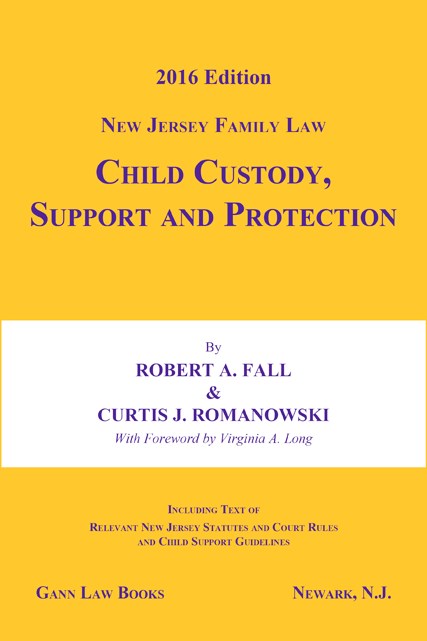
------------------------------
Curtis Romanowski Esq.
Senior Attorney - Proprietor
Metuchen NJ
(732)603-8585
------------------------------